segunda-feira, 11 de agosto de 2008

Já temos os vistos da Rússia e da China
We've got the Russian and Chinese visas

Finalmente temos os vistos todos...
Finally we have all the visas...

Gosto particularmente do meu nome escrito em cirílico!/Like particularly my name written in Cyrilic!

Quase de partida e uma intoxicação alimentar!
Almost leaving and a food poisoning!

Temos quase tudo pronto para a partida na próxima sexta-feira dia 15 de Agosto. Já temos os vistos da Mongólia e da Rússia e vamos hoje buscar os vistos da China. Já temos as reservas de todos os bilhetes de comboio, incluindo o de Helsinkia para S. Petersburgo, bem como o alojamento.
Entretanto, ontem à noite tive uma intoxicação alimentar!

Almost everything ready for the departure next Friday August 15th. We have the Mongolia and Russia visas and we'll get the China visa today. All the train tickets booked, including the Helsinki to S. Petersburg, as well as the hostels.
However, last night I got a food poisoning!

quinta-feira, 31 de julho de 2008

Teste
Test

Esta mensagem é apenas um teste para verificar a eficiência do sistema de envio de posts para o blog usando uma simples mensagem de email.


This message is only a test to verify the eficiency of the post delivery system to the blog, using a simple email messagem.

E se me perderem a bagagem?
And if I got my luggage lost?

Eis a grande questão agora!
Imaginem chegar ao aeroporto de Helsínquia-Vantaa e descobrirem que a vossa bagagem está perdida algures no mundo!
Não me vou preocupar demasiado com isso... vou às compras em Helsínquia ou Moscovo! E sempre viajo mais leve! Basta ter o importante na mochila de mão!

That's the great question right now!
Just imagine arriving at Helsinki-Vantaa and find out that your luggage is lost somewhere in the world!
I'm not going to worry much about it... I'll do some shopping at Helsinki or Moscow! And will travel lighter! It's enough to have the important stuff inside the hand luggage!

sexta-feira, 18 de julho de 2008

Previsão de bagagem
Luggage prevision

Uma primeira previsão das coisa a levar...

Vestuário e calçado
1 par de sapatos de caminhada
1 par de chinelos (óptimos para andar no comboio e para o duche)
10 pares de meias
5 pares de boxers
2 calças/calção leves e de secagem rápida (as minhas fiéis Fjäll Räven... acho que ainda compro mais um par em Helsínquia!)
10 t-shirts
1 forro polar
1 casaco impermeável
1 calções de banho
1 boné
1 buff

Higiene e bem estar
Saco-cama de verão
1 toalha para o banho
1 toalha de rosto
Produtos de higiene (gel de banho, champô, etc.)
Toalhitas papel higiénico
Protector solar
Repelente
Sabão 'azul e branco' vulgo 'macaco'

Alimentação
Sopas liofilizadas
Café instantâneo e chá
Caneca
Cantil

Saúde
Comprimidos para a água (arghh!!)
Medicamentos vários (paracetamol, imodium, ultra levur, etc.)
Pequeno estojo de primeiros socorros

Logística
Guias de viagem (Lonely Planet e TrailBlazer)
Dicionários de bolso
Frases úteis escritas em russo, mongol e chinês
Porta-mapas com bússola, itinerário impresso e mapas diversos
GPS
Caderno de viagem (Moleskine) e canetas/lápis
Lanterna
Isqueiro
Canivete
Fita isoladora
Cordeleta (para uso diverso)
Molas da roupa

Diversos
Máquina fotográfica digital e pilhas recarregáveis
Cartões de memória SD... muitos!
Pen para cartões SD (útil para passar para o blog as fotografias)
Carregador de pilhas
Carregador de telemóvel
Livros para leitura
Mp3
Livro de palavras cruzadas, sudoku, etc.
Lembranças de Portugal (postais, etc.)
Por agora é tudo... sugestões?


A first prevision of the stuff to take...

Clothes and shoes
1 pair of walking shoes
1 pair of slippers (great for on train walking and shower)
10 pairs of socks
5 pairs of boxers
2 light and fast dry trousers/shorts (my faithful Fjäll Räven... I guess I will buy one pair more in Helsinki!)
10 t-shirts
1 fleece
1 rain jacket
1 swim short
1 cap
1 buff

Hygiene and welfare
Summer sleeping-bag
1 body towel
1 hands towel
Hygiene products (shower gel, shampoo, etc.)
Cleaning wet towels
Sun screen
Repellent
Clothe's washing soap

Food
Dry sopes
Coffe and tea
Mug
Water bottle

Health
Purifing water pills (arghh!!)
Sorted pills (paracetamol, etc.)
First aid small kit

Logistic
Travel guides (Lonely Planet and TrailBlazer)
Pocket dictionaries
Useful phrases in russian, mongol and chinese
Map-bag, compass, printed itinerary and sorted maps
GPS
Journey book (Moleskine) pens/pencils
Flaslight
Lighter
pocket knife
Tape
Cordelet (multi-purpose)
Clothes pegs

Stuff
Digital camera and rechargeable batteries
SD memory cards... many!
SD card pen-reader (useful to upload the pictures to the blog)
Batteries charger
Mobil charger
Reading books
Mp3
Portugal souvenirs (postcards, etc.)

terça-feira, 15 de julho de 2008

E o primeiro contra-tempo
And the first misfortune

Primeiro contra-tempo para obter o visto para a China (aqui em Lisboa)... nada feito!
Começou por não termos a confirmação do transporte da Mongólia para a China, mas a confirmação da reserva de alojamento resolveria esse problema, apenas tivemos que alterar a data de entrada e número de dias na China.
"Ok, então?"... a rapariga começou a preencher o recibo! Subitamente, repara que faltam mais de 30 dias até à data de entrada na China, portanto, e como só podemos ter um visto de 30 dias (uma nova regra... onde é que está escrita?) vamos ter que esperar até Agosto para pedir os vistos! Isto significa que teremos que o fazer uma semana antes da partida!

First attempt to get the Chinese visa (here in Lisbon)... not done!
It started with no transport confirmation from Mongolia to China, but the accommodation booking confirmation would solve that problem, we just had to change the entry date and the number of days in China.
"Ok then?"... so the lady started to fill the receipt! Suddenly, she realised that it would be more than 30 days from now until we enter China, therefore, and since one can have only a 30 days visa (a new rule... here is that written?) we have to wait until August to ask for the visas! That means we have to do it one week before leaving!

O primeiro visto
The first visa

Depois de um curto e stressante dia em Londres, conseguimos o visto da Mongólia! Mas sem antes descobrir na secção dos vistos que a embaixada estava fechada naquele dia devido ao Festival Naadam! "Senhor não há serviço de urgência hoje!" dizia o oficial da embaixada. Lá tive que usar as minhas capacidades de persuasão, dizendo que tinha voado de Portugal e tinha que regressar naquele mesmo dia e precisava daqueles vistos! "Bom, ok volte ao meio-dia" respondeu ele!

After a very short and stressful day in London, we got the Mongolia visa! But not after arriving at the visa section and find out that the embassy was closed that day due to the Naadam Festival! "Sir no quick service today!" said the embassy officer. Well I had to used all my persuasion capacities, telling him that I flied from Portugal and had to return that same day and I needed those visas! "Well, ok come back at twelve o'clock" he replied!

quinta-feira, 10 de julho de 2008

Bilhetes de comboio e alojamento
Train tickets and accommodation

Quase pronto! Até agora temos...

  • bilhete de avião Lisboa-Helsínquia (via Londres)
  • bilhete de avião Pequim-Lisboa (idem)
  • bilhete de comboio S. Petersburgo-Moscovo (reservado mas sem voucher ainda
  • bilhete de comboio Moscovo-Irkutsk (idem)
  • alojamento em Helsínquia (na casa do Jukka)
  • alojamento em Moscovo (o apartamento na Praça Pushkin já referido no blog)
  • alojamento na ilha Olkhon (Lago Baikal - Sunny Hostel... simplesmente fantástico!)
  • alojamento em Ulaanbaatar
  • alojamento no Campo Buuveit, Parque Nacional Terelj (num ger)
  • alojamento em Pequim (outro apartamento, no centro da cidade)

Ainda para tratar...

  • bilhete de comboio Helsínquia-S. Petersburgo
  • os três vistos (o da Mongólia será tratado na próxima segunda-feira em Londres!)
  • os bilhetes de comboio para Ulaanbaatar e daqui para Pequim (este último ainda uma
  • grande interrogação!)
  • uma ou duas noites em Irkutsk (iremos chegar às 4 da manhã... meu Deus!)
  • e provavelmente imensas pequenas coisas...

Por enquanto nada mau...

Almost done! So far we got...

  • Lisbon-Helsinki flight ticket (via London)
  • Beijing-Lisbon flight ticket (again thru London)
  • St. Petersburg-Moscow train ticket (reserved but no voucher yet)
  • Moscow-Irkutsk train ticket (the same)
  • accommodation at Helsinki (Jukka's house)
  • accommodation at Moscow (the already refered Pushkin Square's apartment)
  • accommodation at Olkhon Island (Baikal Lake - Sunny Hostel... just great!)
  • accommodation at Ulaanbaatar
  • accommodation at Buuveit Camp at Terelj National Park (in a ger)
  • accommodation at Beijing (another apartment, in the ccity enter)
Still to come...
  • Helsinki-St. Petersburg train ticket
  • the three visas (Mongolia's will be obtained in London next Monday!)
  • the train tickets to Ulaanbaatar and from here to Beijing (the last one a major question mark yet!)
  • one or two nights at Irkutsk (we'll be arriving at 4 am... good lord!)
  • and probably a lot of small stuff...
So far so good!

quarta-feira, 2 de julho de 2008

Um chuveiro portátil
A portable shower

O problema do chuveiro durante as viagens de comboio está resolvido! Com isto podemos ter um duche (quente) na casa-de-banho do comboio. O melhor é levar dois ou três!
The shower problem during the train's journeys is solved! With this we can have a (quick) hot shower in the train's toilet. Better to take two or three!

terça-feira, 24 de junho de 2008

Helsingin kaupunki

Cidade de Helsínquia!
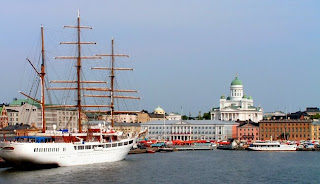
Embora já lá tenha estado por duas vezes, esta cidade, fundada em 1550 pelo Rei Gustavo I da Suécia, merece sempre uma visita, nem que seja apenas de passagem. E é de passagem que iremos estar por Helsínquia, um dia antes de entrarmos na Rússia em direcção a S. Petersburgo.
Helsínquia, ou Helsingfors (em sueco) é a capital e a maior cidade da Finlândia. Encontra-se localizada na parte sul, nas margens do Golfo da Finlândia, no Mar Báltico.
Muitas das principais atracções de Helsínquia estão relacionadas com o mar, incluíndo a fortaleza naval Suomenlinna e a ilha Seurasaari com os seus parques e museus ao ar livre.

City of Helsinki!
Although have been there twice before, this city, founded in 1550 by King Gustav I of Sweden, deserves always a visit, even a short one. And we'll be passing by Helsinki, one day before entering Russia on our way to St. Petersburg.
Helsinki, or Helsingfors (in Swedish) is the capital and largest city of Finland. It is in the southern part of Finland, on the shore of the Gulf of Finland, by the Baltic Sea.
Many of Helsinki's main attractions are related to the sea, including the Suomenlinna naval fortress and the Seurasaari Island with its parks and open-air museum.

segunda-feira, 23 de junho de 2008

Hutongs, a não perder
Hutongs, a must

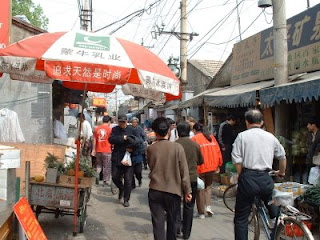
Hutongs são ruas e becos estreitos, frequentemente associados à cidade de Pequim, na China.
Em Pequim, os hutongs são becos formados por linhas de siheyuan, ou zonas residenciais tradicionais. Muitas vizinhanças são formadas pela junção de um siheyuan com outro para formar um hutong, e depois juntar um hutong com outro. A palavra hutong é também utilizada para referir os espaços entre este tipo de zonas residenciais.
Desde os meados do século XX, o número de hutongs em Pequim diminuiu dramaticamente com a demolição para dar lugar a novas estradas e edifícios. Mais recentemente, alguns hutongs têm sido designados como áreas protegidas, numa tentativa de preservar este aspecto da história cultural chinesa. Definitivamente, algo a visitar durante a estadia por Pequim...

Hutongs are narrow streets or alleys, most commonly associated with Beijing, China.
In Beijing, hutongs are alleys formed by lines of siheyuan, traditional courtyard residences. Many neighbourhoods were formed by joining one siheyuan to another to form a hutong, and then joining one hutong to another. The word hutong is also used to refer to such neighbourhoods.
Since the mid-20th century, the number of Beijing hutongs has dropped dramatically as they are demolished to make way for new roads and buildings. More recently, some hutongs have been designated as protected areas in an attempt to preserve this aspect of Chinese cultural history. Definitly, something to visit during our stay in Beijing...

terça-feira, 17 de junho de 2008

Na margem do Angara
On the Angara's bank

Irkutsk é uma das maiores cidades da Siberia e o centro administrativo da Província de Irkutsk, e encontra-se a 5185 Km de Moscovo, numa viagem de comboio.
Como cidade siberiana, Irkutsk esperimenta um clima sub-ártico, caracterizado por variações de temperatura extremas entre estações. As temperaturas podem ser quentes no verão e brutalmente frias no inverno. O mês mais quente do ano em Irkutsk é Julho, com temperaturas médias de 18º C, sendo de 37º C a temperatura mais alta registada.
Irkutsk está situada numa paisagem de pequenos montes e taiga, típico da zona oriental da Siberia, em contraste com a estepe plana e aberta da parte ocidental.

Irkutsk cresceu a partir dos alojamentos de inverno estabelecidos por Yakov Pokhabov (1652) na corrida ao ouro e da colecta de taxas sobre as peles dos Buryats. A cidade recebeu direitos governamentais em 1686. A primeira ligação entre Moscovo e Irkutsk, o Caminho Siberiano (Сибирский Тракт, Sibirsky Trakt) foi construído em 1760. A cidade beneficiou economicamente com esta nova ligação. Muitos produtos novos, importados da China, encontravam-se primeiramente em Irkutsk, incluindo o ouro, diamantes, peles, madeira, sedas e chá.

No passado, Irkutsk e o seu inverno rigoroso, tiveram a reputação de lugar de exílio. No exército de Genghis Khan, os castigos eram ou a morte ou o exílio na Siberia. No início do século XIX, muitos artistas, oficiais e nobres russos foram deportados para o exílio na Siberia devido à sua participação na Revolta Decembrista contra o Czar Nicolau I.

Irkutsk tornou-se o maior centro intelectual e social no exílio, e muita da herança cultural da cidade se deve a esta sociedade exilada; muitas das suas casas de madeira, decoradas com cinzeladuras em madeira, sobrevivem hojem em austero contraste com os blocos de apartamentos da era soviética que os rodeiam.

Irkutsk is one of the largest cities in Siberia and the administrative center of Irkutsk Oblast, situated 5,185 kilometers (3,222 mi) by rail from Moscow.
As a Siberian city, Irkutsk experiences a subarctic climate, characterized by extreme variation of temperatures between seasons. Temperatures can be very warm in the summer, and brutally cold in the winter. The warmest month of the year in Irkutsk is July, when the mean temperature is 18 °C, the highest temperature recorded being 37º C.
Irkutsk is situated in a landscape of rolling hills within the thick taiga, typical of eastern Siberia, and in contrast to the flat, open steppe of western Siberia.

Irkutsk grew out of the winter quarters established (1652) by Yakov Pokhabov for gold-trading and for the collection of the fur tax from the Buryats. The town gained official city rights from the government in 1686. The first road connection between Moscow and Irkutsk, the Siberian Road (Сибирский Тракт, Sibirsky Trakt), was built in 1760. The city benefitted economically from this new road. Many new products, often imported from China, were widely available in Irkutsk for the first time, including gold, diamonds, furs, wood, silk, and tea.
During the past centuries Siberia, with its severe climate, has had a reputation as the place for exile. In Genghis Khan's army, punishment was either death or exile to Siberia. In the early 19th century, many Russian artists, officers, and nobles were sent into exile to Siberia for their part in the Decembrist revolt against Tsar Nicholas I. Irkutsk became the major center of intellectual and social life for these exiles, and much of the city's cultural heritage comes from them; many of their wooden houses, adorned with ornate, hand-carved decorations, survive today in stark contrast with the standard Soviet apartment blocks that surround them.

segunda-feira, 16 de junho de 2008

Duas noites num ger e uma lapsha
Two nights in a ger and a lapsha

Iremos dormir duas noites num ger ou yurt no Buuveit Camp, no Parque Nacional de Gorkhi-Terelj, com três refeições por dia. Qual o prato tradicional na Mongólia? Borrego! Portanto, poderemos ter um farnel de sandes de borrego para o almoço, um cozido de borrego para o jantar e muito provavelmente, borrego para o pequeno-almoço! E para beber...leite de cabra!

Os saborosos buuz no vapor/The tasty buuz in steam

Por todos os locais na cidade existem letreiros a dizer "buuz". Estes são pequenos pastéis recheados com carne, que são cozinhados a vapor. Outros pasteis são cozidos em água (bansh) ou fritos em gordura de carneiro (khuushuur). Outros pratos combinam a carne com arroz ou massa fresca, numa variedade de cozidos (tsuivan, budaatai huurga) ou sopas (lapsha).
O leite é fervido para separar a nata (Öröm). O resto do leite é transformado em queijo (byaslag), coalho seco (aaruul), iogurte, kefir, e um liquor de leite (shimiin arkhi).

A bebida nacional, o ayrag/The national beverage, the ayrag

A bebida nacional mais proeminente é o ayrag, leite de égua fermentado! O cereal mais popular é a cevada, que é frita e maltada. Quando transformada em farinha (arvain gulir) é comida como uma papa em leite gordo e açúcar ou bebida numa mistura de chá com leite. A bebida de todos os dias é o chá com leite salgado (süütei tsai), que se pode tornar numa sopa quando lhe é adicionado arroz, carne ou bansh.

Boortsog

Para sobremesa, os Mongóis têm o "boortsog", uma espécie de biscoito ou bolacha.

We will be sleeping for two nights in a ger or yurt, at Buuveit Camp, NP Gorkhi-Terelj, with three meals a day. What is the traditional dish in Mongolia? Goat! So, we might have a pack of goat sandwiches for lunch, a goat stew for dinner and most probably, goat for breakfast! And to drink... goat's milk!
In the city, every other locale displays a sign saying "buuz". Those are dumplings filled with meat, which are cooked in steam. Other types of dumplings are boiled in water (bansh), or deep fried in mutton fat (khuushuur). Other dishes combine the meat with rice or fresh noodles into various stews (tsuivan, budaatai huurga) or soups (lapsha).
Milk is boiled to separate the cream (Öröm). The remaining skimmed milk is processed into cheese (byaslag), dried curds (aaruul), yoghurt, kefir, as well as a light milk liquor (shimiin arkhi). The most prominent national beverage is "airag", fermented mare's milk. A popular cereal is barley, which is fried and malted. The resulting flour (arvain gulir) is eaten as a porridge in milk fat and sugar or drunk mixed in milk tea. The everyday beverage is salted milk tea (süütei tsai), which may turn into a robust soup by adding rice, meat, or bansh.
For dessert, Mongolians have "boortsog", a type of Mongolian biscuit or cookie.

Rappel no Kentii
Rappel at Kentii

O Campo Buuveit, no Parque Nacional de Gorkhi-Terelj, será o nosso campo base durante parte da nossa estadia na Mongólia. Este parque nacional inclui a encosta sul do Khentii. Terelj é uma das áreas protegidas da Mongólia mais visitadas, oferecendo paisagens naturais magníficas, interessantes formações rochosas encontrando-se coberto de florestas, zonas húmidas e tundra alpina.

The Buuveit Camp, at NP Gorkhi-Terelj, will be our base-camp for part of Mongolia visit. This national park includes the southern Khentii mountain range. Terelj is one of the Mongolian mostly visited and protected areas. It offers natural beautiful scenery, interesting rock formations and is covered by forests, wetlands and alpine tundra.

quarta-feira, 11 de junho de 2008

Uma noite na Praça Pushkin
One night at Pushkin Square

Já temos reservado um apartamento em Moscovo, mesmo no centro da cidade, na Praça Pushkin! A descrição do mesmo, segundo a agência, é a seguinte:

"Este apartamento de três estrelas com dois quartos tem uma fenomenal localização mesmo junto à rua Tverskaya, mas continua numa zona muito calma. O apartamento tem um quarto de dormir com uma cama de casal e uma sala de estar/jantar grande com um sofá-cama para duas pessoas. Tem também uma casa de banho com azulejos e uma pequena, mas suficiente, cozinha completamente equipada. Esta área situa-se perto de uma das principais ruas de Moscovo - Tverskaya. Como poderão reparar, esta rua está constantemente cheia de movimento e os restaurantes da moda, lojas de marca, clubes, cafés e outras atracções magnetizam literalmente as pessoas. Apenas para mencionar alguns destes lugares, não muito longe da Praça Pushkin poderás encontrar o Café Pushkin e o Night Flight."

We already have booked an apartment in Moscow, right in the city center, at Pushkin Square. The property description is as follow:

"This three star, two room apartment has a phenomenal location right next to Tverskaya Street, but it is still located in a very calm area.
The apartment features a cozy bedroom with a double bed and a large living room/ dining area with a pull out sofa that sleeps two. There is also a nicely tiled bathroom and a small but sufficient kitchen that's fully equipped.
This area is right by the main street of Moscow- Tverskaya. As you will notice, this street is
constantly bustling with life as its top notch restaurants, brand shops, clubs, cafés and many other attractions literally magnetize people. Just to mention a few of these places, not far from Pushkin square you will find Café Pushkin and Night Flight."

segunda-feira, 9 de junho de 2008

Vamos aprender Russo!
Let's learn Russian!

O dia da partida aproxima-se e é tempo de ir treinando algumas palavras que podem ser úteis durante a viagem!
Começamos pelo Russo que começa logo por ter caracteres diferentes!

Bom dia - доброе утро (do-bra-e u-tra)
Boa noite - добрый вечер (dob-ri vye-cher)
Sim- да (da)
Não - нет (nyet)
Muito obrigado - Большое спасибо (bal'-sho-e spa-si-ba)
Adeus - до свидания (da svi-da-ni-ya)

O melhor é arranjar um dicionário de bolso e andar com frases escritas!

The departure day is getting close and it's time to start learning some useful words for the journey!
We will begin with Russian that has in the characters the first challenge!

Good morning - доброе утро (do-bra-e u-tra)
Good evening - добрый вечер (dob-ri vye-cher)
Yes - да (da)
No - нет (nyet)
Thank you very much - Большое спасибо (bal'-sho-e spa-si-ba)
Goodbye - до свидания (da svi-da-ni-ya)

Better to get a pocket dictionary and have some written phrases!

sexta-feira, 23 de maio de 2008

Já temos 'asas'...
We've got wings...

Comprámos os bilhetes de avião na passada quarta-feira, ficando decididas as datas de início e fim desta viagem, mas mantendo ainda uma flexibilidade nos horários dos comboios!
Adicionámos mais um país à nossa rota inicial, Finlândia! Iremos voar de Lisboa para Helsínquia, e daí para S. Petersburgo em comboio. Decidimos visitar S. Petersburgo por um dia e viajar à noite para Moscovo.
De Moscovo, e depois de dois dias inteiros a visitar a capital da Rússia, iremos viajar durante quatro dias até Irkutsk e o Lago Baikal. Dois dias na ilha de Olkhon, mais um dia em Irkutsk e directo para Ulan-Baatar e o Campo Buuveit no Parque National de Terelj. De Ulan-Baatar iremos directos para Pequim, o nosso destino final.

We got the plane tickets last Wednesday, and therefore, the start and ned dates defined, but still flexible on trains schedule!
We have added another country to our initial route, Finland! We will be flying from Lisbon to Helsinki and from there to St. Petersburg by train. We have decided to visit St. Petersburg for one day and travel during night to Moscow.
From Moscow, and after two full days of visiting the capital of Russia, we will be traveling for four days to Irkutsk and to Lake Baikal. A two days stay at Olkhon Island, another day in Irkutsk and direct to Ulan-Baatar and the Buuveit Camp at the National Park Terelj. From Ulan-Baatar we will be traveling direct to Beijing as our final destination.

quinta-feira, 6 de março de 2008

Olkhon, terra dos Buryats
Olkhon, Buryats' land

Olkhon (Ольхон) é a quarta maior ilha lagunar do mundo e de longe a maior do lago Baikal, na Sibéria, com uma área de 730 km².
Olkhon tem uma dramática combinação de terreno e um riquíssimo conjunto de marcos arqueológicos. A este é marcado por uma linha ao longo da costa de íngremes montanhas, e a cerca de 1.276 m acima do nível médio do mar, o Monte Zhima é o ponto mais alto da ilha, com o topo a atingir os 818 m acima do nível das águas do lago Baikal. A ilha é suficientemente larga para ter os seus próprios lagos, e apresenta uma combinação de taiga, estepe e até um pequeno deserto! Um estreito profundo separa a ilha de terra.

Os indígenas Buryats acreditam que a ilha é um lugar espiritual, e na zona costeira a oeste, perto de Khuzhir, encontra-se o mais famoso marco do lago Baikal, a Shamanka, ou a Rocha de Shaman. Os nativos crêem que Burkhan, uma figura moderna do culto religioso dos povos de Altai, vive na caverna deste rochedo. A rocha é um dos nove lugares mais sagrados da Ásia. O museu de Olkhon, Revyakin, tem uma exposição fantástica sobre a ecologia e a etnografia da ilha, incluíndo uma coleção de cachimbos e de samovares.

Olkhon é um dos centros sagrados do Shamanismo e também é considerado um centro da cultura Kurumchinskay dos séculos VI-X.

Olkhon (Ольхон) is the fourth-largest lake-bound island in the world. It is by far the largest island in Lake Baikal in eastern Siberia, with an area of 730 km².
Olkhon has a dramatic combination of terrain and is rich in archeological landmarks. Steep mountains line its eastern shore, and at 1,276 m above sea level, Mount Zhima is the tallest point on the island, peaking at 818 m above the water level of Lake Baikal. The island is large enough to have its own lakes, and features a combination of taiga, steppe and even a small desert! A deep strait separates the island from the land.
The indigenous Buryats believe the island to be a spiritual place, and on the western coast, close to Khuzhir, is Baikal's most famous landmark, the Shamanka, or Shaman's Rock. Natives believe that Burkhan, a modern religious cult figure of the Altai peoples, lives in the cave in this rock. The rock is one of nine Asian Most Sacred Places. The museum of Olkhon named after Revyakin has a great exposition on the nature and ethnography of the island including smoking pipes and samovars collections.

Olkhon is one of the sacred shamanist center and also considered a centre of Kurumchinskay culture of VI-X centuries.

terça-feira, 26 de fevereiro de 2008

Novos passageiros

New passengers

Por vezes os projectos de viagem sofrem alterações e quando menos se espera temos que mudar um percurso, um destino, ou, em último caso, encontrar novos companheiros de viagem! O Rui, que foi o primeiro mentor deste projecto, por razões pessoais teve que desistir de 'apanhar este comboio e ficar em terra'.
Mas os comboios são assim mesmo, é um constante movimento de entra-e-sai o que torna estas viagens tão fascinantes e únicas. Num avião todos parecem muito mais introvertidos!
Bem vindos a bordo João, Ana e São...

Sometimes travel projects change and suddenly we need to alter a route, a destiny, or, at the end, we may need to find new travel comrades! Rui, the first project mentor, had to quit 'jumping into this train and stay at the platform'.
But that's trains, a constant walk-in and walk-out movement of people and that's why these travels are so fascinating and unique. In a plane everyone looks too much inward!
Welcome aboard João, Ana and São...